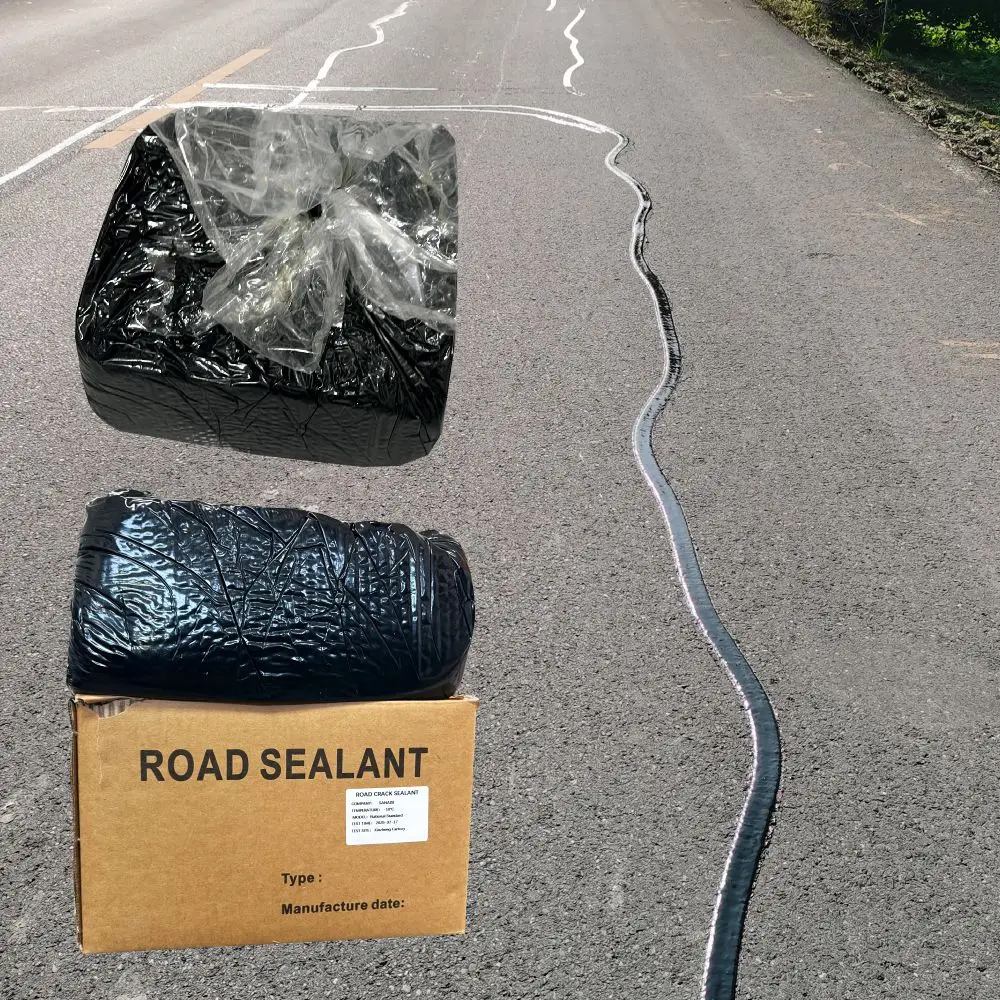
Based on the ambient temperature differences in the area of use, road sealants are classified into cold and low-temperature types, temperate types, and hot and high-temperature types. According to national standard classifications, road sealants can be divided into high-temperature, ordinary, low-temperature, cold, and severe cold types. Based on the heating method, road sealants can be divided into direct heating and indirect heating types. Road sealants melt quickly, have strong adhesion, and exhibit excellent deformation resistance and elastic recovery. Compared to other types of road sealants, Sanaisi Road Sealant has a lower viscosity and easily penetrates various cracks. At a high temperature of 180°C, the liquid road sealant penetrates and fuses with the asphalt pavement. Upon cooling, it develops a strong bond and, relying on its strong elasticity, deforms elastically as the crack expands and contracts, maintaining its sealing effect.
Asphalt road sealant is primarily composed of a composite material of modified asphalt and thermoplastic rubber. Its key performance characteristics are low viscosity at high temperatures and high elasticity at low temperatures. Replacing traditional asphalt crack caulking with sealant for treating asphalt pavement cracks represents a significant advancement in current highway maintenance technology. Traditional methods are limited by asphalt's low-temperature brittleness and high-temperature softening properties, resulting in cracks quickly reopening after repair. This problem increases the labor and material costs of pavement maintenance. However, sealant crack caulking overcomes these shortcomings in terms of material performance.
| Item | Specification |
| Product Name | Hot-Pour Asphalt Crack Sealant |
| Product Category | Pavement Crack Sealing Material |
| Main Material System | Modified Asphalt + Thermoplastic Rubber |
| Application Method | Hot-Pour Crack Sealing |
| Typical Application Temperature | Approx. 180°C |
| Main Performance | Strong Adhesion / Elastic Recovery / Deformation Resistance |
| Water Resistance | Supported |
| Pavement Compatibility | Asphalt Pavement / Cement Concrete Pavement |
| Heating Method | Direct Heating / Indirect Heating Types |
| Climate Grades | Multiple Temperature-Specific Grades Available |


Used for longitudinal and transverse pavement cracks as part of preventive highway maintenance.
Proper crack sealing helps reduce water ingress and slows further deterioration around existing cracks.
The main application is sealing cracks in asphalt pavement before they develop into more serious structural deterioration.
The supplied material also identifies application on cement concrete pavements.
Project engineers should confirm joint dimensions and sealant grade according to the actual concrete pavement design.
Suitable for selected airfield pavement crack-sealing applications where the approved material specification meets project requirements.
Can be used for crack and joint sealing in bridge pavement maintenance applications according to the project specification.

It is a polymer-modified asphalt material designed to be heated into a fluid state and poured into pavement cracks to create a flexible, waterproof seal after cooling.
The supplied product information describes the material as primarily composed of:
Modified Asphalt + Thermoplastic Rubber
Yes.
This is a hot-pour road sealant, so it must be heated before application.
The supplied technical description states that the liquid sealant is applied at approximately:
180°C
The final recommended heating range should follow the confirmed formulation specification.
Yes. The supplied information states that different grades are available for:
Low-temperature
Cold
Severe-cold
applications.
The correct version should be selected according to the project climate.
Yes.
The product classification includes high-temperature formulations for hot-climate pavement maintenance.
Yes. Asphalt pavement crack sealing is one of its primary applications.
The supplied packaging information states that it is also suitable for cement concrete pavement sealing applications.
Project compatibility should still be confirmed according to joint design and project specification.
The supplied product description identifies strong water resistance and states that the sealant is designed not to absorb water or easily debond after water contact.
After cooling, the polymer-modified material maintains elastic properties, allowing it to deform together with repeated crack movement and continue providing a sealing function.
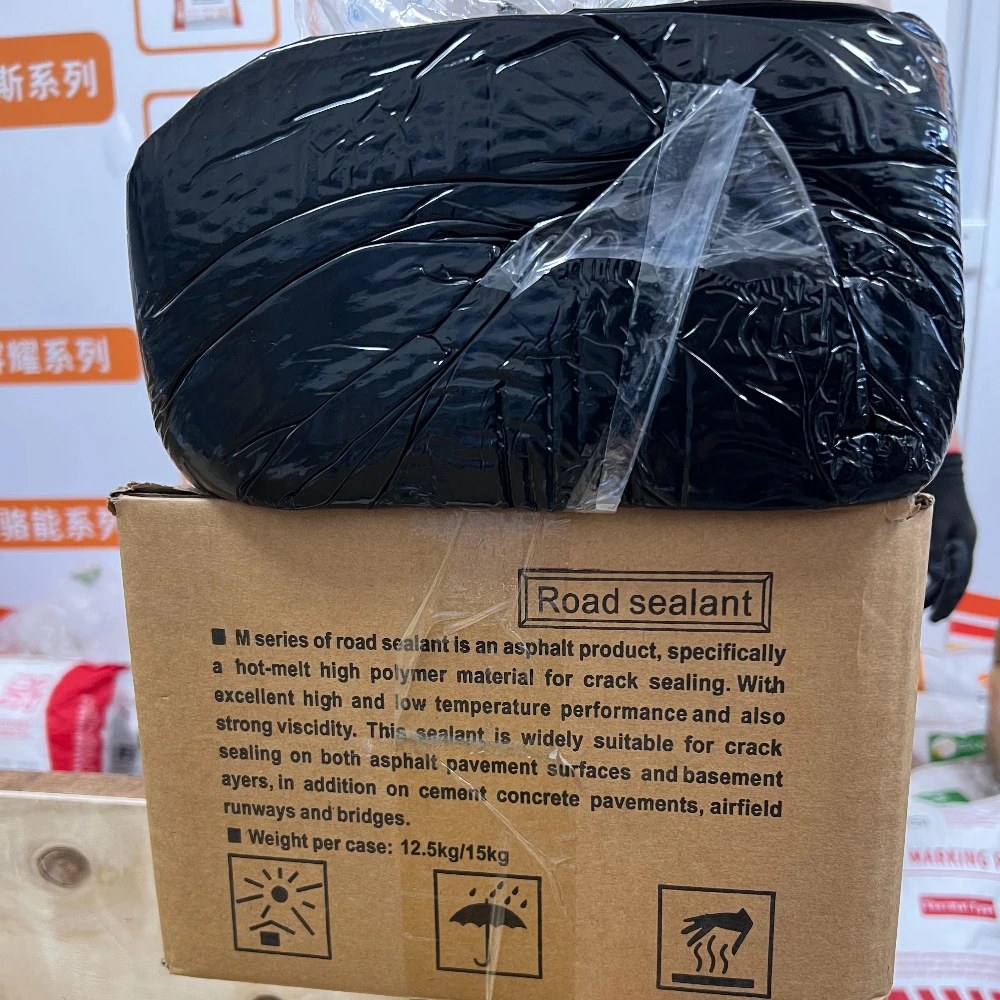
The supplied packaging shows:
12.5 kg / 15 kg per case
Final packaging should be confirmed according to the order.
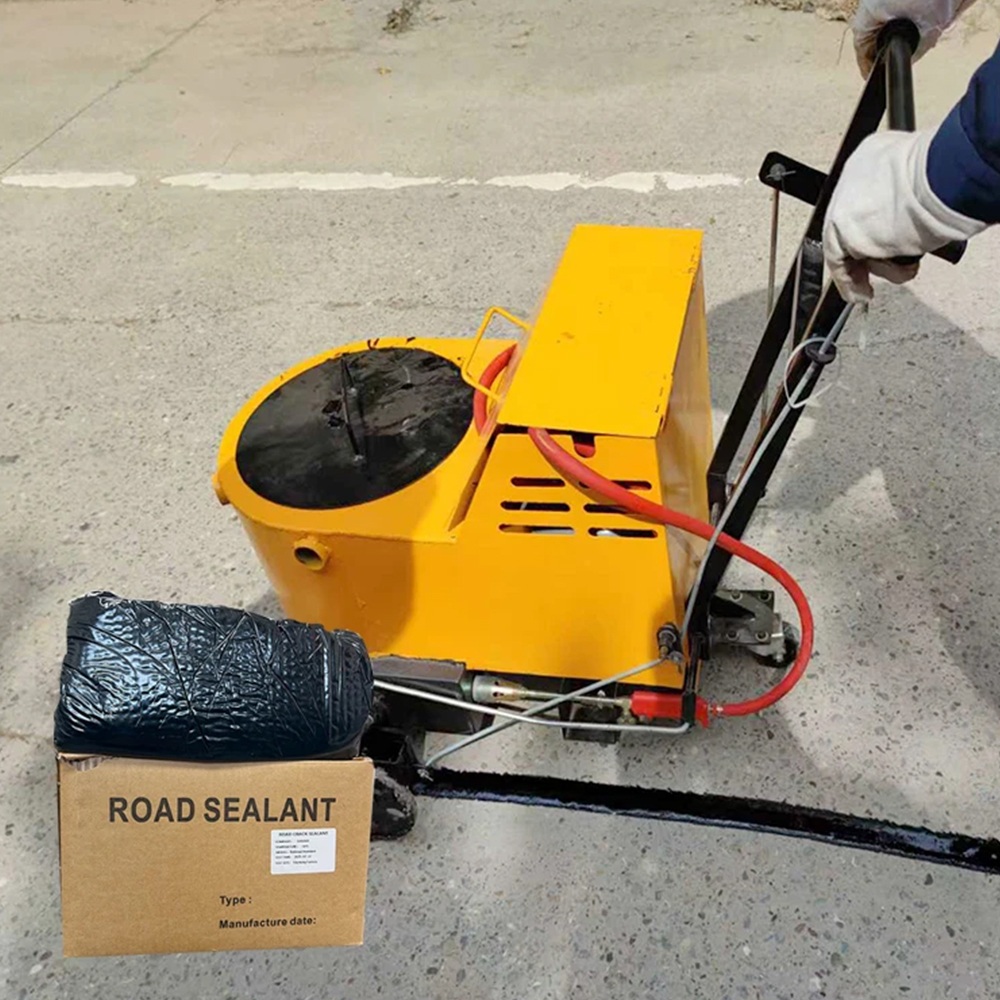
The supplied application images show the road sealant being used together with crack-sealing equipment.
For the website, this can be presented as:
Crack sealing material and compatible road maintenance equipment can be discussed together according to project requirements.
unless the exact machine model is confirmed.